Boat Push Poles
We manufacture carbon fiber push poles for shallow-water skiffs. Specify shaft and section lengths, ferrule connections, foot profile and tip material for the boat and bottom conditions.
Custom Carbon Fiber Fishing Push Pole for Shallow Water Boats
Product Overview
Our Carbon Fiber Fishing Push Pole is designed for shallow water fishing, flats boats, skiffs, and other small watercraft.
Manufactured with high-quality carbon fiber materials, the push pole combines lightweight construction, excellent stiffness, and reliable structural performance. It helps anglers move their boats quietly through shallow water, providing better control while minimizing disturbance to fish.
The pole can be manufactured in multi-section or customized configurations to meet different boat sizes and fishing requirements. Custom connection systems, pole lengths, diameters, and end fittings are available.
With our carbon fiber tube manufacturing and customization capabilities, we can provide OEM and ODM solutions for fishing equipment brands, marine suppliers, and distributors.
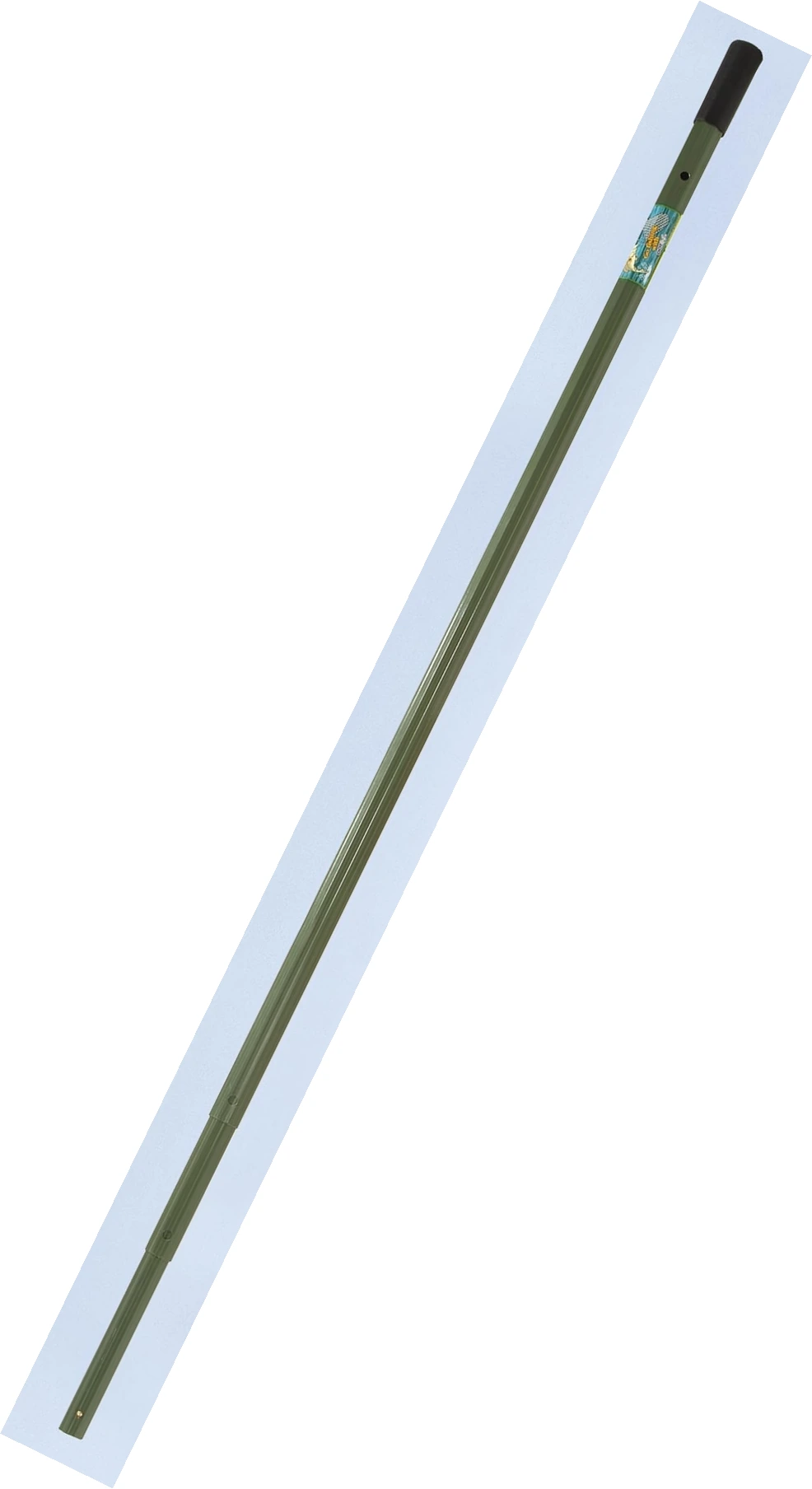
This Push-N-Glide shaft is shown without a foot fitted. The grip and working end are both visible.
Industry reference · Drifter MarineKey Features
1. Lightweight Carbon Fiber Construction
- High-quality carbon fiber composite material
- Lightweight design for easier handling and transportation
- Excellent stiffness for efficient force transmission
- Suitable for demanding marine environments
2. High Stiffness and Structural Performance
- Carbon fiber layup optimized for axial stiffness
- Unidirectional fiber reinforcement options
- Designed to withstand bending loads during boat propulsion
- Custom wall thickness and fiber orientation available
3. Reliable Section Connection Design
- Multi-section construction for convenient transportation and storage
- Custom ferrule and connection structures
- Connection bonding and sealing solutions available
- Designed for reliable performance during repeated use
4. Custom Pole Foot and Tip Options
Different foot and tip configurations can be developed according to the customer's application.
- Fork-style push pole foot
- Wide bridge foot
- Bridged fork foot
- Nylon or customized protective tips
- Customized connection fittings
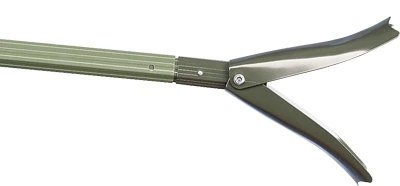
The two blades open out from the shaft to form a wider contact area at the working end.
Industry reference · Drifter Marine · Detail crop5. OEM & ODM Customization
- Custom overall length and section dimensions
- Custom tube diameter and wall thickness
- Different carbon fiber material and layup options
- Custom surface finish and logo printing
- Customized foot, tip, and connection accessories
Applications
- Shallow water fishing boats
- Flats boats and skiffs
- Saltwater fly fishing
- Shallow water boat maneuvering
- Fishing guides and professional anglers
- Marine and fishing equipment brands
Technical Specifications
| Item | Specification |
|---|---|
| Product Name | Carbon Fiber Fishing Push Pole |
| Material | T300/T700/T1100 carbon fiber |
| Construction | Multi-Section / Customized |
| Overall Length | Customized |
| Section Length | Customized |
| Tube Diameter | Customized |
| Wall Thickness | Customized |
| Fiber Layup | UD / 3K / Customized |
| Connection Type | Bonded Ferrule / Customized |
| Surface Finish | 3K Weave / Clear Coat / Customized |
| Pole Foot | Fork / Bridged Fork / Wide Bridge / Customized |
| Pole Tip | Nylon / Metal Insert / Customized |
| Logo | Custom Printing Available |
| OEM / ODM | Available |
Final specifications and structural performance can be developed according to the customer's boat type and application requirements.
Why Choose Our Carbon Fiber Fishing Push Poles?
- Professional carbon fiber tube manufacturing experience
- Custom fiber layup and structural design
- Lightweight construction with excellent stiffness
- Flexible section and connection configurations
- Custom pole feet, tips, and accessories
- OEM and ODM manufacturing support
We work with fishing equipment manufacturers, marine product brands, and distributors to develop customized carbon fiber push poles for different market requirements.
Contact us to discuss your carbon fiber fishing push pole project.
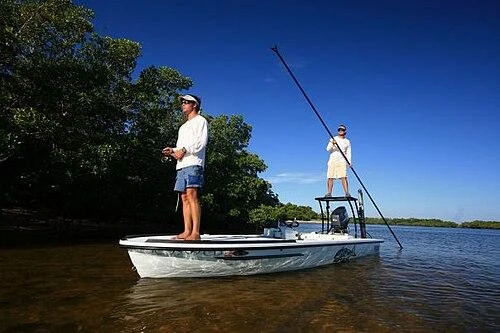
Propelling a skiff across shallow flats
A push pole transfers the operator’s effort through the shaft and foot to the bottom. On a shallow flat, the person poling may stand on a raised platform well above the waterline. The correct working length depends on that stance, the depth and the grip available during the stroke.
Bottom conditions change what matters at the far end. In soft mud, foot shape affects how the load spreads and how easily the foot can be withdrawn. A worn or incompatible foot can change the feel of an otherwise familiar shaft. For transport, check the grip, shaft and foot against the boat’s clips and deck layout.
Choose a shaft arrangement
| Configuration | When it fits | What to check |
|---|---|---|
| Fixed shaft | Regular use on a boat that can carry the full pole on deck. | Check shaft diameter at the holders and clearance beyond the clips. |
| Sectional shaft | Road travel or shared storage with a hard limit on packed size. | Compare the longest section and how the joint feels under the intended use. |
| Telescoping shaft | A boat whose crew needs adjustable length or shorter deck storage. | Check the grip position and approved use at each working extension. |
Will the assembled pole fit the locker?
Superstick lists its 6–12 model at about 73½ in collapsed without the duck foot and 78½ in with it. For a 76 in straight storage bay, the bare shaft clears the nominal length, but the assembled pole is about 2½ in too long. The opening and the space needed to insert the shaft may narrow the usable envelope further.
Measure between the actual obstructions, including hinges and latches. Decide whether removing the foot after every trip fits the crew’s routine. Give the supplier the usable storage length, the foot configuration and the clip locations. For an anchor requirement, select equipment expressly approved for the proposed bracket and use.
Compare poles for your flats boat
Water depth and stance
Give the usual depth range and height of the poling platform above the water. Both affect the length available for a comfortable grip.
Bottom contact
Describe soft mud, sand or firmer ground. Compare foot area, tip shape and how a worn foot can be replaced.
Deck storage
Measure the distance between holders and the clearance at each end. Check the shaft diameter where the clips actually grip.
Common questions
Describe the water and the boat
Note the usual depth, bottom conditions and whether the operator stands on deck or on a raised poling platform. Include the longest closed length the boat can stow.
Choose the foot and lock
A broad foot spreads contact on soft mud. Compare the foot shape, attachment and availability of replacements. For telescopic poles, check the section lock and grip position as well as overall weight.
Can it also serve as an anchor?
Anchoring is a separate, model-specific use. Ask for the manufacturer’s instructions for the exact pole, foot, extension and bottom conditions before specifying it for that purpose.
What to send for a boat fit check
- Boat layout, poling position and the longest section you can carry on deck or in transit.
- Typical bottom conditions and your preference for a fixed, sectional or telescopic shaft.
- Shaft diameter and a photo of existing holders or a foot you want to reuse.