Telescopic Camera Poles
We manufacture 10–75 ft carbon fiber camera poles with up to ten sections. Specify the packed size, lock and camera mount for your photography or video rig.
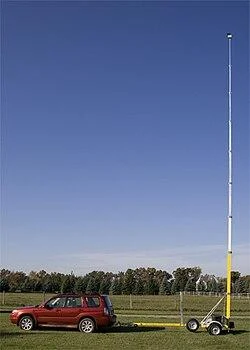
Custom Carbon Fiber Telescopic Camera Pole for Professional Photography and Video Recording
Product Overview
Our Carbon Fiber Telescopic Camera Pole is designed for professional photography, video recording, aerial filming, and outdoor shooting applications.
Manufactured from high-quality carbon fiber composite materials, this camera pole offers an excellent combination of lightweight construction, high stiffness, and structural stability. It allows users to position cameras and recording equipment at different heights and angles, making it ideal for overhead photography, elevated filming, and hard-to-reach shooting locations.
The multi-section telescopic design provides flexible length adjustment while maintaining convenient portability and storage. With customizable lengths, tube diameters, section configurations, and mounting interfaces, our carbon fiber camera poles can be tailored to different camera systems and professional shooting requirements.
We provide OEM and ODM manufacturing services for camera equipment brands, photography accessory manufacturers, and professional video equipment distributors.
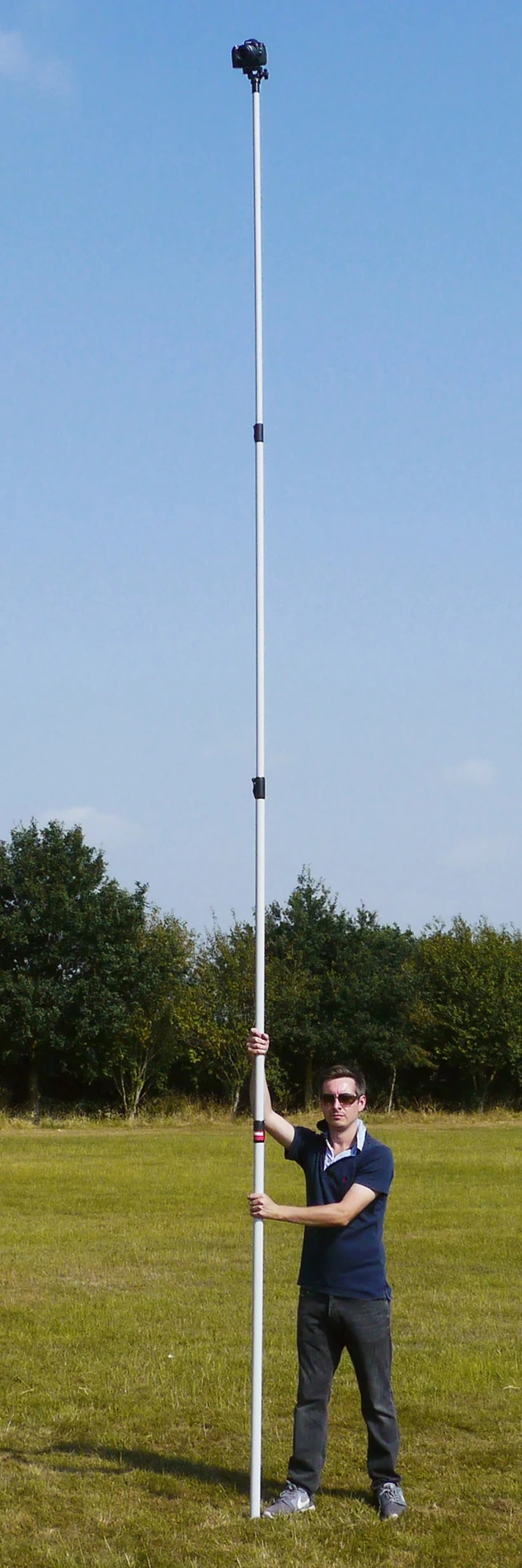
A ground-level operator provides scale. The camera head and the lower end of the pole are both in frame.
Industry reference · Hague Camera Supports · Detail cropKey Features
1. Lightweight Carbon Fiber Construction
- High-quality carbon fiber material
- Lightweight design for easier handling and transportation
- High stiffness for improved camera positioning
- Helps reduce operator fatigue during extended shooting sessions
- Custom carbon fiber layup options available
2. High Stiffness and Structural Stability
- Optimized carbon fiber tube construction
- UD carbon fiber reinforcement options
- Designed to reduce unwanted pole bending
- Suitable for supporting compatible cameras and accessories
- Custom wall thickness and fiber orientation available
3. Multi-Section Telescopic Design
- Multiple telescopic sections for flexible length adjustment
- Customizable extended and retracted lengths
- Smooth extension and retraction
- Compact structure for convenient transportation and storage
- Custom section numbers and tube dimensions available
4. Reliable Locking System
- Clamp locking options
- Twist-lock mechanisms available
- Secure section positioning during operation
- Custom locking structures for different applications
5. Custom Camera Mounting Connections
- Standard camera mounting interfaces available
- 1/4"-20 and 3/8"-16 threaded connection options
- Custom mounting adapters and brackets
- Compatible with different cameras, action cameras, and accessories
- Customized top and bottom connections available
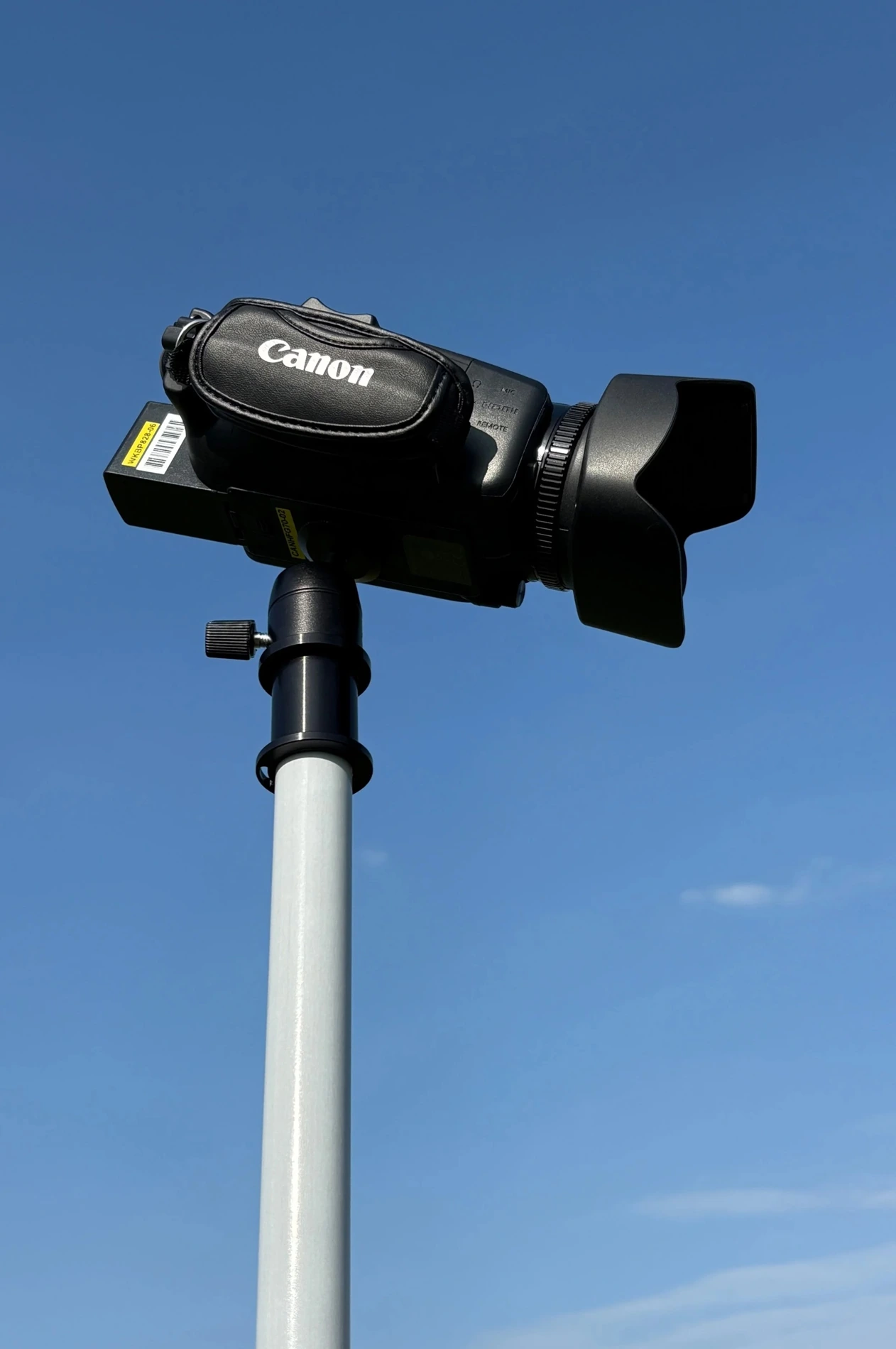
The platform supports the camera above a pivot, which sets its viewing angle relative to the pole.
Industry reference · Hague Camera Supports6. Custom Surface Finish and Appearance
- 3K carbon fiber weave
- UD carbon fiber finish
- Matte or glossy surface
- Custom colors and logo printing
- OEM branding and packaging available
Applications
- Professional photography and video recording
- Elevated camera shooting
- Overhead filming and photography
- Sports and event recording
- Outdoor filming and documentary production
- Action camera extension systems
- Inspection and monitoring applications
- Customized camera mounting equipment
Technical Specifications
| Item | Specification |
|---|---|
| Product Name | Carbon Fiber Telescopic Camera Pole |
| Material | Carbon Fiber Composite |
| Construction | Multi-Section Telescopic Design |
| Extended Length | 10ft-75ft |
| Retracted Length | Customized |
| Number of Sections | Maximum 10 sections |
| Tube Diameter | Customized |
| Wall Thickness | Customized |
| Fiber Layup | UD / 3K / Customized |
| Surface Finish | Matte / Glossy / 3K / Customized |
| Locking System | Clamp Lock / Twist Lock / Customized |
| Top Connection | 1/4"-20 / 3/8"-16 / Customized |
| Bottom Connection | Customized |
| Accessories | Camera Mounts / Adapters / Customized |
| Color | Customized |
| OEM / ODM | Available |
Specifications can be customized according to camera weight, required working length, mounting system, and application requirements.
Customization & OEM/ODM Services
We provide customized carbon fiber camera poles for professional photography equipment brands, video production accessory manufacturers, and distributors.
Available customization options include:
- Overall extended and retracted length
- Number of telescopic sections
- Tube diameter and wall thickness
- Carbon fiber material and fiber layup
- Clamp locking and connection structures
- Camera mounting interfaces and adapters
- Surface finish, color, and logo printing
- Custom accessories and packaging
Samples and customized product development are available upon request.
Why Choose Our Carbon Fiber Camera Poles?
- Professional carbon fiber tube manufacturing experience
- Lightweight construction with excellent stiffness
- Custom tube dimensions and telescopic configurations
- Flexible camera mounting and connection solutions
- Different carbon fiber surface finishes available
- OEM and ODM manufacturing support
Whether you are developing a new camera accessory or sourcing carbon fiber telescopic poles for your existing product range, we can provide customized manufacturing solutions to meet your requirements.
Contact us to discuss your custom carbon fiber telescopic camera pole project.
Placing the lens above an obstruction
For a photograph above a hedge or fence, the relevant height is the position of the lens. First decide where the operator or base can stand and how the photographer will see the frame. The camera may need to tilt or rotate once raised, making the head, plate and control method just as important as shaft length.
A handheld action camera and a camera on a supported mast present different loads. A lens projecting forward creates an offset even when the overall weight appears modest. For a supported system, record the intended extension, available footprint and complete rig configuration before asking for a payload figure.
Choose the support arrangement
| Configuration | When it fits | What to check |
|---|---|---|
| Handheld extension | A light compatible camera and short periods of operator-supported framing. | Compare grip, packed length and camera retention. |
| Supported mast | A repeatable elevated viewpoint with space for the specified support. | Verify the complete mast and base combination, operating conditions and permitted load at height. |
| Action-camera pole | A compact rig with a proprietary camera shoe or mounting fingers. | Identify the exact mount, camera orientation and whether an adapter changes the balance. |
Which payload figure applies at full height?
Hague lists 2 kg maximum payload for its HP1 and identifies 1.5 kg as the ideal camera weight at maximum height. Those entries answer different questions. In an illustrative rig, a 0.90 kg camera and lens, 0.35 kg head, 0.10 kg plate and 0.25 kg receiver add up to 1.60 kg. Quoting the camera alone hides almost half of the installed load.
Send the assembled mass, extension, mounting arrangement and a side view showing the lens offset. Ask which documented configuration covers that combination. Record where the monitor and battery are mounted. Moving either from the operator end to the head changes the mass the pole must support at the top.
Compare systems for the intended shot
Lens position
Specify the required height at the lens, camera orientation and clearance around the subject. Compare published mast length separately.
Support arrangement
Identify whether the assembly is handheld, tripod-supported or mounted. Request payload limits for that arrangement at the planned extension.
Monitoring
Consider how you will view, trigger and power the camera when raised. Check that cables and connectors clear the head as it tilts.
Common questions
Count everything above the pole
Add the camera, lens, head, plate, adapters and any remote unit. Ask for the permitted top load at your intended extension and support configuration. The camera body weight is only one part of that total.
How will you frame the shot?
Check the mounting thread or proprietary shoe, tilt adjustment, triggering and live-view arrangement. If a cable runs down the pole, account for movement through the full extension range.
Transport and setup
Compare packed length, support footprint and the clearance needed to raise the rig. For outdoor work, obtain the operating limits for the complete system, including the base or tripod.
What to send for a camera rig check
- A list of everything above the pole, its combined weight and a side view showing any offset from the mount.
- Head or plate model, mounting interface and any remote control, video or power leads.
- Required lens height, available footprint, indoor or outdoor setting and transport limit.